
Table of Contents
Equity vs Gold and Silver: How a Smart Investor Decides the Right Balance for Long-Term Investors
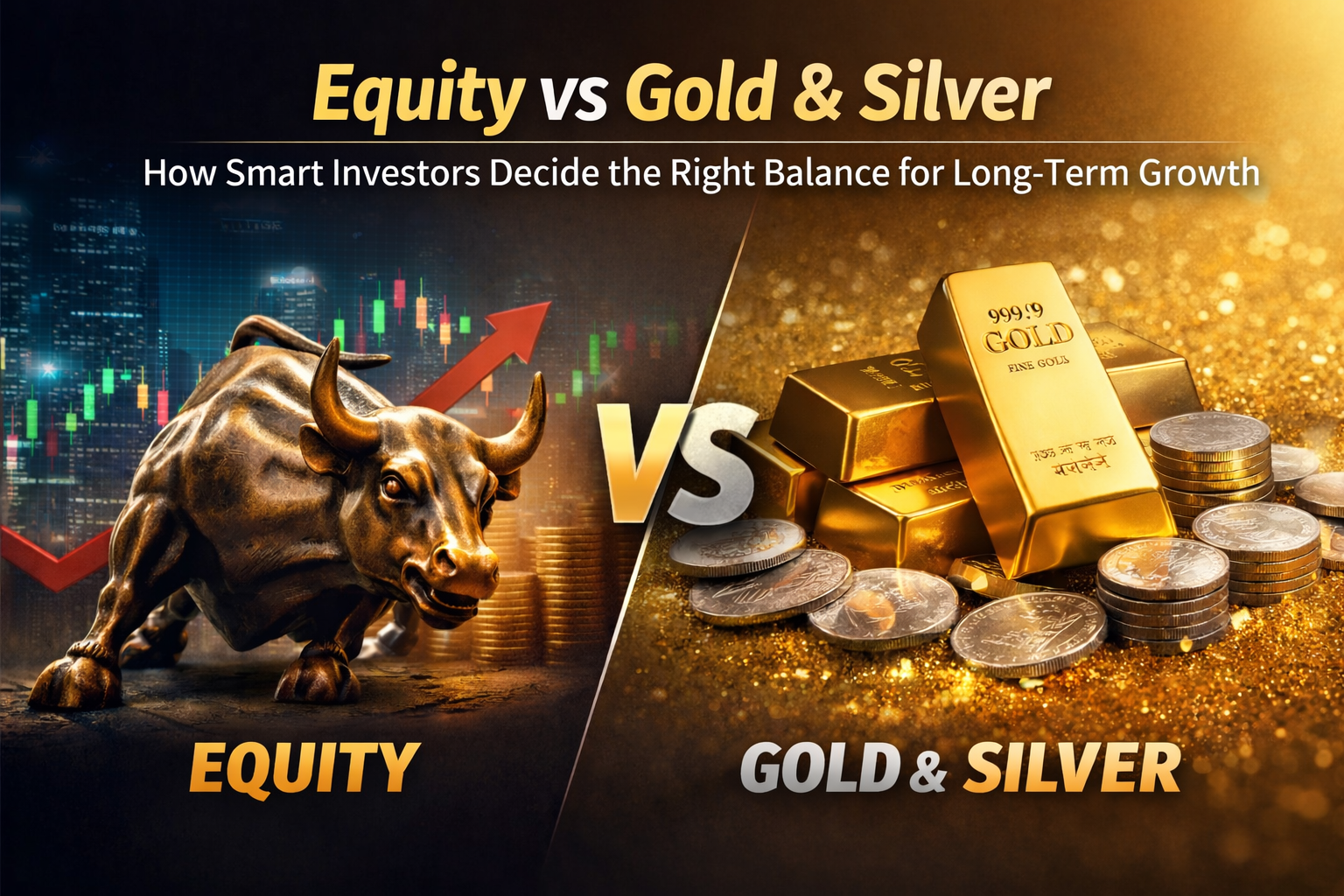
One of the most common dilemmas investors face is deciding how much to allocate to equity versus precious metals like gold and silver. Queries such as equity vs gold investment, gold vs equity which is better, and ideal asset allocation for long-term investors are frequently searched, but the real clarity comes from understanding how these assets work together.ls like gold and silver. Queries The question often sounds simple — which one is better? — but the answer lies not in choosing one over the other, but in understanding the role each plays in a well-structured investment portfolio.
Equity and precious metals serve fundamentally different purposes. Treating them as competitors is where most investors go wrong. Smart investing begins when we stop looking for a single “best” asset and start focusing on balance, suitability, and long-term objectives.
Equity represents ownership in businesses. When you invest in equities, you participate in the growth of companies and, by extension, the economy. Over long periods, equity has historically been one of the most effective ways to grow wealth and beat inflation. It rewards patience, discipline, and the ability to stay invested through market cycles. However, equity also comes with volatility. Market corrections, global events, and economic slowdowns can lead to sharp short-term fluctuations that test investor emotions.
Gold and silver, on the other hand, are not growth engines. They do not generate cash flows or compound earnings like businesses do. Their strength lies elsewhere. Precious metals act as a store of value and tend to perform well during periods of uncertainty, high inflation, or financial stress. When confidence in paper assets weakens, gold and silver often provide stability to a portfolio. Their primary role is protection, not aggressive wealth creation.
This difference in behavior is precisely why comparing equity and precious metals as “better or worse” misses the point. Equity works best when economies expand and businesses grow. Gold and silver become valuable when uncertainty rises and risks increase. Instead of choosing one, investors benefit far more by combining both thoughtfully.
The right allocation between equity and precious metals depends on several personal factors. An investor with a long time horizon, stable income, and higher risk tolerance may allocate a larger portion to equity to capture long-term growth. Someone closer to financial goals or retirement, or with lower risk appetite, may prefer a higher allocation to defensive assets like gold along with fixed-income instruments. There is no universal ratio that works for everyone, and any fixed formula without context can be misleading.
What truly matters is asset allocation discipline. A portfolio that blends growth assets like equity with stabilizing assets such as gold and silver tends to experience smoother returns over time. During strong equity markets, equities drive growth. During turbulent phases, precious metals help cushion the downside. This balance allows investors to stay invested, avoid emotional decisions, and stick to their long-term plan.
At MarketShala, we believe successful investing is less about predicting which asset will perform best next and more about building a portfolio that can endure different market conditions. Equity helps build wealth, while gold and silver help preserve it. When aligned correctly with an investor’s goals and risk profile, they complement eIn the end, the question is not whether equity is better than gold or silver. The real question is whether your portfolio is aligned with your goals, risk appetite, and time horizon.y is better than gold or silver. The real question is whether your portfolio is balanced enough to grow in good times andThoughtful asset allocation between equity, gold, silver, and other assets, guided by clarity and discipline, remains one of the most powerful tools an investor can use to build long-term financial security.
If you are unsure about the right equity allocation, gold investment exposure, or overall portfolio balance for your financial goals, a structured discussion can often bring clarity. At MarketShala, we help investors understand their needs and plan investments accordingly, without chasing short-term market noise. A well-informed decision today can make a meaningful difference to long-term financial security.
इक्विटी बनाम सोना और चांदी: दीर्घकालिक निवेशकों के लिए सही संतुलन कैसे तय करें
निवेशकों के सामने सबसे आम दुविधाओं में से एक यह होती है कि उन्हें अपनी निवेश राशि का कितना हिस्सा इक्विटी में और कितना हिस्सा सोना व चांदी जैसी कीमती धातुओं में लगाना चाहिए।
Equity vs Gold Investment, Gold vs Equity – कौन बेहतर है, और Long-term investors के लिए सही asset allocation जैसे सवाल अक्सर सर्च किए जाते हैं। लेकिन असली स्पष्टता तब आती है जब हम यह समझते हैं कि ये सभी एसेट्स एक-दूसरे के साथ मिलकर कैसे काम करते हैं।
सवाल सुनने में आसान लगता है — कौन बेहतर है?
लेकिन इसका जवाब किसी एक को चुनने में नहीं, बल्कि यह समझने में है कि एक संतुलित निवेश पोर्टफोलियो में हर एसेट की क्या भूमिका होती है।
इक्विटी और कीमती धातुएं मूल रूप से अलग-अलग उद्देश्यों की पूर्ति करती हैं। इन्हें एक-दूसरे का विकल्प या प्रतिद्वंद्वी मानना ही वह गलती है जो अधिकांश निवेशक कर बैठते हैं। समझदारी भरा निवेश तब शुरू होता है जब हम “सबसे अच्छा एसेट” ढूंढने के बजाय संतुलन, उपयुक्तता और दीर्घकालिक लक्ष्यों पर ध्यान देना शुरू करते हैं।
इक्विटी का मतलब है व्यवसायों में हिस्सेदारी। जब आप इक्विटी में निवेश करते हैं, तो आप कंपनियों के विकास और व्यापक अर्थव्यवस्था की वृद्धि में भागीदार बनते हैं। लंबे समय में, इक्विटी ने ऐतिहासिक रूप से संपत्ति निर्माण और महंगाई को मात देने में अहम भूमिका निभाई है। यह धैर्य, अनुशासन और बाजार के उतार-चढ़ाव के दौरान निवेशित रहने की क्षमता को पुरस्कृत करता है।
हालांकि, इक्विटी में अस्थिरता भी होती है। बाजार में सुधार, वैश्विक घटनाएं और आर्थिक मंदी अल्पकालिक उतार-चढ़ाव ला सकती हैं, जो निवेशकों की भावनाओं की परीक्षा लेती हैं।
दूसरी ओर, सोना और चांदी विकास के साधन नहीं हैं। ये न तो नियमित आय उत्पन्न करते हैं और न ही व्यवसायों की तरह कमाई को कंपाउंड करते हैं। इनकी ताकत कहीं और है।
कीमती धातुएं मूल्य संरक्षण का काम करती हैं और अनिश्चितता, उच्च महंगाई या वित्तीय तनाव के समय बेहतर प्रदर्शन करती हैं। जब कागजी संपत्तियों पर भरोसा कमजोर पड़ता है, तब सोना और चांदी पोर्टफोलियो को स्थिरता प्रदान करती हैं। इनकी मुख्य भूमिका सुरक्षा है, आक्रामक संपत्ति निर्माण नहीं।
यही व्यवहार में अंतर इस बात को स्पष्ट करता है कि इक्विटी और कीमती धातुओं की तुलना “बेहतर या खराब” के रूप में करना सही नहीं है।
इक्विटी तब अच्छा प्रदर्शन करती है जब अर्थव्यवस्था बढ़ती है और व्यवसाय फलते-फूलते हैं। वहीं, अनिश्चितता बढ़ने और जोखिम बढ़ने पर सोना और चांदी का महत्व बढ़ जाता है। किसी एक को चुनने के बजाय, दोनों को समझदारी से मिलाकर रखने से निवेशकों को कहीं अधिक लाभ मिलता है।
इक्विटी और कीमती धातुओं के बीच सही अनुपात कई व्यक्तिगत कारकों पर निर्भर करता है। जिन निवेशकों का निवेश क्षितिज लंबा होता है, आय स्थिर होती है और जोखिम सहने की क्षमता अधिक होती है, वे दीर्घकालिक विकास के लिए इक्विटी में अधिक निवेश कर सकते हैं।
वहीं, जो निवेशक अपने वित्तीय लक्ष्यों या रिटायरमेंट के करीब होते हैं, या जिनकी जोखिम सहने की क्षमता कम होती है, वे सोने जैसी रक्षात्मक संपत्तियों और फिक्स्ड इनकम साधनों को प्राथमिकता दे सकते हैं। सभी के लिए एक ही अनुपात उपयुक्त हो, ऐसा कोई सार्वभौमिक नियम नहीं है। संदर्भ के बिना तय किया गया कोई भी फॉर्मूला भ्रामक हो सकता है।
असल में सबसे ज़रूरी है asset allocation का अनुशासन। ऐसा पोर्टफोलियो जिसमें इक्विटी जैसे ग्रोथ एसेट्स और सोना-चांदी जैसे स्थिरता देने वाले एसेट्स शामिल हों, समय के साथ अपेक्षाकृत स्मूथ रिटर्न देता है। मजबूत इक्विटी बाजार में इक्विटी विकास को आगे बढ़ाती है, जबकि अस्थिर दौर में कीमती धातुएं नुकसान को सीमित करने में मदद करती हैं। यह संतुलन निवेशकों को भावनात्मक फैसलों से बचाता है और उन्हें अपनी दीर्घकालिक योजना पर टिके रहने में सहायता करता है।
MarketShala में हमारा मानना है कि सफल निवेश अगले सबसे अच्छा प्रदर्शन करने वाले एसेट की भविष्यवाणी करने के बारे में नहीं है, बल्कि ऐसा पोर्टफोलियो बनाने के बारे में है जो अलग-अलग बाजार परिस्थितियों में टिक सके।
इक्विटी संपत्ति निर्माण में मदद करती है, जबकि सोना और चांदी संपत्ति की रक्षा करती हैं। जब इन्हें निवेशक के लक्ष्यों और जोखिम प्रोफाइल के अनुसार सही ढंग से जोड़ा जाता है, तो ये एक-दूसरे के पूरक बनते हैं, विकल्प नहीं।
अंततः सवाल यह नहीं है कि इक्विटी सोने या चांदी से बेहतर है या नहीं। असली सवाल यह है कि क्या आपका पोर्टफोलियो आपके लक्ष्यों, जोखिम क्षमता और समय-सीमा के अनुरूप संतुलित है या नहीं।
स्पष्टता और अनुशासन के साथ किया गया इक्विटी, सोना, चांदी और अन्य एसेट्स के बीच सही asset allocation दीर्घकालिक वित्तीय सुरक्षा बनाने के सबसे प्रभावी साधनों में से एक है।
यदि आप अपनी वित्तीय आवश्यकताओं के अनुसार सही इक्विटी एलोकेशन, सोने में निवेश का स्तर या कुल पोर्टफोलियो संतुलन तय करने को लेकर असमंजस में हैं, तो एक संरचित चर्चा अक्सर स्पष्टता ला सकती है। MarketShala में हम निवेशकों को शॉर्ट-टर्म बाजार शोर के पीछे भागे बिना, उनकी ज़रूरतों को समझते हुए निवेश योजना बनाने में मदद करते हैं। आज लिया गया एक समझदारी भरा निर्णय भविष्य की वित्तीय सुरक्षा में बड़ा अंतर ला सकता है।
MarketShala
Loved this analysis? Stay ahead in the markets with Markshala’s expert insights.
Get deeper market research, trade setups, and investing guidance delivered straight to your inbox.
👉 For collaborations & queries: somnath@markshala.com
👉 WhatsApp Connect: +91 8209177236
Click Here to join our partner Equity / Other Capital Market Investing Platform and unlock MarketShala’s expert-backed investing guidance. You may also join our WhatsApp community MarketShalians to stay tuned with regular updates in your wealth creation journey.
Click Here to join our partner in Crypto Currency Market Investing Platform and unlock MarketShala’s expert-backed investing guidance.
Stay informed. Stay profitable.
– Team Markshala
Disclaimer
The views and analysis provided above are for educational and informational purposes only and should not be considered as financial or investment advice. Trading and investing in the stock market involve risk, and past performance does not guarantee future results.
***********
|| ॐ नमः शिवाय ||